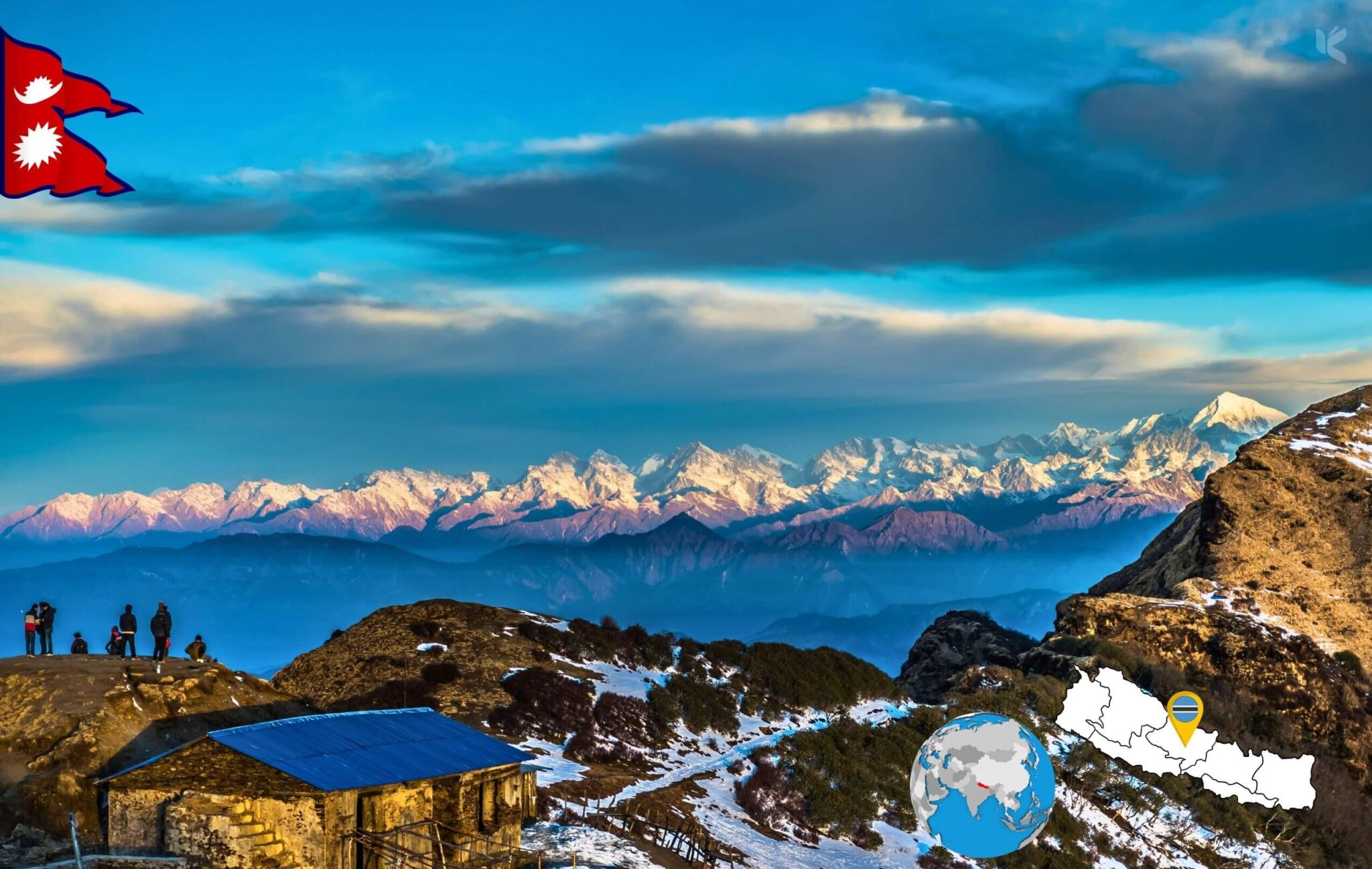
Nepal is one of those destinations where timing genuinely matters. Come in October and the skies are clear, the trails are packed with energy, and the mountains look like they were placed there just for your camera. Come in July and you’ll be watching the clouds roll in every afternoon and wondering where those views went.
The good news: Nepal has two excellent windows to visit, one in autumn and one in spring. Outside those windows, it’s not impossible – it just takes more planning and adjusted expectations.
Here’s a clear, honest breakdown of Nepal’s seasons, what each one is actually like, and which months suit different types of travelers.
Read more: Pokhara Travel Guide with Best Places to Visit
The Short Answer: When to Visit Nepal
Autumn (October–November) is the best overall time to visit Nepal. Skies are clear, trails are in prime condition, and temperatures are comfortable at most elevations.
Spring (March–April) is an excellent second choice, especially for trekkers who want rhododendron blooms and slightly fewer crowds than peak autumn.
Avoid the monsoon months (June–August) for trekking unless you’re heading to rain-shadow regions like Upper Mustang. Winter (December–February) is manageable at lower elevations but brings cold and some trail closures at altitude.
Nepal’s Four Seasons at a Glance
Nepal has four distinct travel seasons, each with real trade-offs.
Autumn (September–November): The Best Season
Autumn is Nepal’s best trekking season, with clear skies and stable weather running from mid-September through late November.
The monsoon clears out by late September, leaving the air scrubbed clean and the landscapes vivid green. As September progresses, the weather just gets better dust, insects, and cloud washed away by months of rain. October is widely considered the single best month, combining peak clarity with comfortable temperatures.
Days on popular routes like Annapurna hover around 15°C, with night temperatures rarely dipping below zero at lower elevations. At Everest Base Camp (5,364m), nights get significantly colder, so pack accordingly.
There’s a cultural bonus too. Nepal’s biggest festivals “Dashain and Tihar” fall squarely in this window. In 2026, Dashain runs from October 11 to October 25, with Tika day on October 21. Tihar follows from November 8 to 11. Witnessing these festivals adds a layer to any Nepal trip that no amount of trail time can replace.
One practical note: festival season affects logistics. Domestic flights, buses, and trekking guides get booked out weeks in advance during Dashain. October 22 to November 5 is often cited as the calmest, clearest stretch within Nepal’s busiest season – right after Dashain’s rush eases and before Tihar pulls staff off the trail. If you can time your arrival here, you get the best of both worlds.
November clears out somewhat as the month progresses. Nepal in November may have its clearest skies of the year – excellent for mountain peak views with easy trekking conditions all the way through before the quieter season begins.
Best for: First-time visitors, trekkers, couples, families, photographers, festival-seekers.
Read more: Best SIM Card in Bangladesh for Tourists
Spring (March–May): Flowers, Warmth, and Good Views
Spring is the second-best time to visit Nepal, and for some travelers it’s actually preferable.
Trekking and climbing conditions in spring are excellent, especially early to mid-season from March through April. Days grow longer, snows have melted from the trails, and temperatures pick up – though it’s still chilly at night. Rhododendrons light up the mountainsides in shades of red, pink, and white.
March and April are ideal. The trails are busy but not as packed as October. Mid-March to early April sees very few people compared to autumn, so the Himalayas can feel peaceful and uncrowded.
As May arrives, things shift. Heat builds in the valleys, pre-monsoon showers begin, and haze starts to reduce visibility – particularly in Kathmandu and Pokhara. Pre-monsoon showers and haze in May make visibility increasingly poor, and those all-important mountain views can be regularly obscured.
Spring is also the main season for peak climbing expeditions. Passes like Thorong La on the Annapurna Circuit and Larke La on the Manaslu Circuit are free from snow, and peaks like Mera and Island Peak see their highest annual traffic.
Best for: Trekkers, nature photographers, climbers, travelers who prefer less crowded trails.
Monsoon (June–August): Best Avoided for Trekking — With One Exception
Nepal’s monsoon is a real monsoon. It doesn’t necessarily rain all day, but it does rain every day – typically in the late afternoon or at night, with mornings sometimes sparkling and clear. Trails become slippery, leeches appear on lower-elevation paths, and mountain views are frequently hidden behind cloud.
That said, there’s a smart exception. Upper Dolpo and Upper Mustang lie in rain-shadow areas – they sit behind the Himalayan barrier and receive very little monsoon rain. Trekkers who want a crowd-free, culturally rich experience should consider these regions during the summer months.
The Yartung festival, featuring traditional horse races, takes place in Upper Mustang in August and draws very few foreign visitors – a genuinely rare thing in Nepal these days.
Budget-conscious travelers also use the monsoon window for cheap hotel rates in Kathmandu and Pokhara, where the cities themselves remain functional even if mountain views disappear.
Best for: Upper Mustang and Dolpo trekkers, budget travelers, culture-focused visitors to Kathmandu.
Winter (December–February): Cold but Underrated
Winter in Nepal is often overlooked, which is either a problem or an advantage depending on what you’re after.
Winter is the ideal time for wildlife-watching in Nepal’s subtropical lowlands – Chitwan and Bardia National Parks are at their best during the dry, cool months. Grasslands thin out, making it easier to spot rhinoceros, tigers, and elephants.
In Kathmandu, January is the coldest month, with average highs around 19°C and lows dropping to about 2.4°C. That’s cold at night but perfectly walkable during the day. The city is significantly less crowded, and hotels often drop rates considerably.
For trekking, the picture is mixed. Heavy snowfall closes some passes on the Annapurna Circuit in December to February, but many tracks at lower elevations remain open year-round. Shorter, lower-altitude routes – the Ghorepani Poon Hill trek, the Langtang Valley lower sections – stay accessible and are beautifully quiet.
November and December offer perfectly good skies and the normally busy trails like Annapurna and Everest Base Camp see much lighter foot traffic.
Best for: Wildlife safaris, budget travelers, solo hikers seeking solitude, Kathmandu cultural visits.
Read more: 10 Benefits of Traveling Alone
Nepal Weather by Month: A Quick Reference
| Month | Conditions | Best For |
|---|---|---|
| January | Cold, dry, clear | Chitwan safari, Kathmandu sightseeing |
| February | Warming, dry | Low-altitude treks, Poon Hill |
| March | Warm days, clear skies, rhododendrons | All major trekking routes |
| April | Peak spring trekking | Everest, Annapurna, peak climbing |
| May | Pre-monsoon haze building | Upper Mustang, avoid if views are priority |
| June | Monsoon arrives | Upper Mustang, Dolpo, budget Kathmandu |
| July | Peak monsoon, heavy rain | Rain-shadow regions only |
| August | Hot, wet | Upper Mustang (Yartung festival), avoid elsewhere |
| September | Monsoon clears late month | Late-month trekking preparations |
| October | Best month overall | All destinations, festivals, trekking |
| November | Excellent visibility, cooling | All major treks, clearest skies |
| December | Cold, quiet, clear | Chitwan, low-altitude treks, budget travel |
Weather patterns can shift year to year. Always check forecasts closer to travel dates.
Best Time to Visit Kathmandu
Spring and autumn are the best times for Kathmandu – clear skies, comfortable temperatures, and the city’s full cultural energy.
Average temperatures in Kathmandu sit around 16°C in January, rising to 26°C in April and 27°C in May before the monsoon arrives. For walking around Thamel, Patan, and Bhaktapur, March through April and October through November are ideal.
The monsoon makes the city damp and grey but doesn’t shut it down. If you’re combining Kathmandu with a trek, just factor in that visibility to the surrounding hills disappears almost entirely from June to August.
One thing many visitors don’t plan for: Kathmandu’s air quality. Dust and pollution build through winter and early spring. February and March can be particularly hazy before rains arrive.
Best Time to Visit Pokhara
Pokhara‘s appeal is almost entirely about its views of the Annapurna massif across Phewa Lake. Which means cloud matters here more than anywhere else.
The best time to visit Pokhara is during October through April, when temperatures sit between 20°C and 30°C and rainfall is minimal – ranging from just 12mm in November to 145mm in April.
Pokhara is actually Nepal’s rainiest city because of its position at the foot of the Annapurna Range – monsoon rainfall can reach 940mm in July alone. During the monsoon, Phewa Lake swells and turns muddy, and the mountains disappear entirely for days at a time.
Autumn is Pokhara at its best. The lake reflects clear blue sky, the Annapurna range stands sharply visible in the mornings, and the city hums with trekkers beginning and ending their routes.
Best Time to Trek Everest Base Camp
The standard Everest Base Camp trek takes 12–14 days from Lukla and sits at elevations up to 5,364m. Getting timing right matters more here than on lower routes.
Autumn (September to November) has the most favorable conditions and is the most popular season for high-altitude hiking, closely followed by early to mid-spring (March to early May).
October is the month most guides recommend for Everest Base Camp. Skies are at their clearest, the air is cold but not extreme, and the post-monsoon freshness makes colors genuinely vivid.
March and April work well too, with the added bonus of fewer trekkers. The trade-off is slightly more cloud at altitude and colder nights in March.
Avoid the monsoon (June–August) for EBC. Trails become dangerous and helicopter rescues spike. December through February gets bitterly cold at altitude – below -15°C at night at Gorak Shep, just below base camp – though short winter windows do exist for experienced trekkers.
Trekking During Festivals: What You Need to Know
If your visit overlaps with Dashain or Tihar, know what that means practically.
Many teahouse owners and trek staff go home to their families. Some lodges reduce services or close entirely. Domestic flights and tourist buses sell out weeks in advance. Prices in Kathmandu and Pokhara spike.
That said, witnessing Nepal during Dashain is genuinely special. Families reunite, swings appear in village squares, and the atmosphere throughout the country shifts into something warm and celebratory. If you’re trekking through villages during this period, you’ll be welcomed into something most tourists never see.
The practical advice: book everything – flights, accommodation, guides, and permits – at least 6–8 weeks in advance if you’re visiting in October.
Read more: Top 25 Travel Tips Every Traveler Should Know
Visiting Nepal on a Budget: Best Timing
November and December offer a useful window for budget travelers who still want decent weather – trails are quiet, trekking permits and fees stay the same, but lodge and hotel rates often drop noticeably compared to peak October.
January and February offer the lowest prices of the year in both Kathmandu and Pokhara, with the caveat that it’s cold and some high passes are closed.
The monsoon months (June–August) deliver the lowest prices overall, but most experienced travelers would only recommend this for rain-shadow trekking regions or cultural Kathmandu trips.
Common Mistakes Travelers Make with Nepal’s Seasons
- Dashain dominates logistics in October every year. Domestic flights sell out, guide availability drops, and lodge rates jump. Always check the specific Dashain and Tihar dates for your travel year before booking.
- Early May can still be good, but by mid-May the pre-monsoon haze has usually settled in over most of Nepal. If views of the Himalayas are your priority, end-of-April is your cutoff.
- Poon Hill, the Langtang Valley lower section, and the Kathmandu Valley rim trails are quiet, cheap, and genuinely beautiful in December. This is one of Nepal’s best-kept seasonal timing secrets.
- Even in October, temperatures at Everest Base Camp drop well below zero at night. Many first-time trekkers underpack for altitude in what looks like a mild autumn month on paper.
A Practical Note on Permits and Bookings
Nepal requires trekking permits for most popular routes – the Trekkers’ Information Management System (TIMS) card, plus conservation area or national park entry fees depending on your route. These can be obtained in Kathmandu and Pokhara.
Everest Base Camp trekkers also pass through Sagarmatha National Park, which has its own entry fee. Restricted area permits like those for Upper Mustang carry significantly higher costs and require a licensed Nepali agency to apply.
Permit requirements and fees change periodically. Always confirm current requirements through the Nepal Tourism Board (visitnepal.com) before finalizing your trip.
Quick Reference: Who Should Go When
- First-time visitors: October–November
- Trekkers (Everest, Annapurna, Langtang): October–November or March–April
- Families with children: October or March–April (lower-altitude treks)
- Budget travelers: December–February or June–August (lower elevations only)
- Wildlife (Chitwan, Bardia): December–February
- Couples: October–November for views; March–April for blooms
- Solo hikers wanting solitude: November–December or February–March
- Festival seekers: October (Dashain, Tihar)
- Rain-shadow trekking (Upper Mustang, Dolpo): May–August
If you’re planning a Nepal trip and want to read about specific destinations and travel routes, Kuhudak has more guides to help you plan well. Getting the season right is the single biggest factor in how you’ll remember Nepal – and with the right window, it’s one of the most extraordinary places on earth to travel.